M
Menachem Encaoua
Entrepreneur @ Turning Ideas Into Businesses
"He took the time to understand my business and explained the strategy in a way that was practical and easy to follow. Very knowledgeable, honest, and genuinely helpful."
You track brand mentions in ChatGPT by running the same buyer questions every month and writing down when it names you. The method matters more than the tool. Same prompts, same schedule, or the numbers drift and tell you nothing.
Write down the ten questions a buyer would actually type before choosing someone in your category. Not your brand name. The questions people ask when they do not know you yet.
Ask ChatGPT each one in a fresh chat with memory off. Log what comes back in a simple sheet.
| Column | What you record | Why it matters |
|---|---|---|
| Prompt | The exact question, word for word | Changing the wording changes the answer, so freeze it |
| Named? | Yes or no for your brand | This is your real visibility number |
| Position | First, middle, or last in the list | Being named third is not the same as being named first |
| Competitors named | Every other brand it lists | Tells you who the model already trusts |
| Sources cited | Any links the answer shows | This is where the answer actually came from |
| Date | The day you ran it | Lets you see movement instead of guessing |
ChatGPT does not give everyone the same answer. The same prompt can name you one time and skip you the next.
So run each prompt three times and record how many times out of three you got named. A brand named twice out of three is in a very different position from one named once out of nine.
Turn off chat memory and personalization before you test. Otherwise you are measuring what ChatGPT knows about you, not what it tells a stranger.
Tools like Profound, Peec AI, Otterly, Ahrefs Brand Radar, and the AI tracking now built into Semrush and SE Ranking run those prompts for you, across several assistants, on a schedule.
What you are paying for is scale and consistency. They run hundreds of prompts across ChatGPT, Perplexity, Gemini and Google AI Overviews without you sitting there.
Every one of these tools measures the symptom. They tell you that you are missing. They do not tell you why.
The why is almost always the same. The model has not seen your brand described by other people in the words buyers use. That is a job you do off your own site, and it is covered in why ChatGPT does not mention your brand.
Be careful with the traffic numbers some of these dashboards report too. Assistant referral data is thin and often estimated. Treat the mention rate as the real signal and the traffic figure as a rough guide.
Proof should sit near the claims it supports. These recommendations give buyers a clearer reason to trust the work.
Entrepreneur @ Turning Ideas Into Businesses
"He took the time to understand my business and explained the strategy in a way that was practical and easy to follow. Very knowledgeable, honest, and genuinely helpful."
Founder, CodeBlu Development
"I recommend Zechariah for all your SEO, PPC, and marketing needs."
CEO, Launch Point Behavioral Health Network
"Within a couple of months, I was ranking at the top for my key searches. I saved a ridiculous amount of money, easily thousands of dollars."
Child & Family Therapist
"Within one week, our business was showing up #1 on Google Maps for every target search term we cared about. I was honestly blown away."
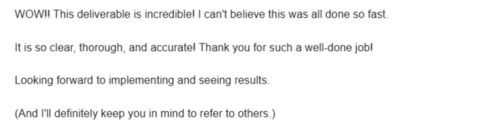
A SaaS founder found brand-name confusion, category language issues, citation gaps, and site architecture problems from an AI SEO audit.
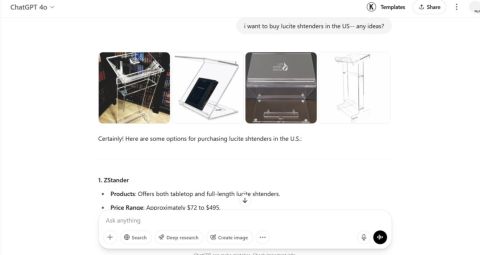
Bing indexing, foundational links, schema, and clearer page structure helped ZStander show for a product search in ChatGPT.
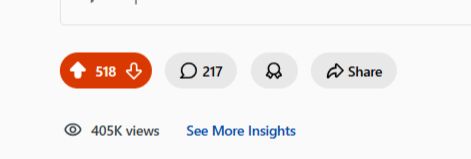
One organic Reddit post reached 405,000 views with 518 upvotes and 217 comments, using the recommendation method rather than paid promotion.
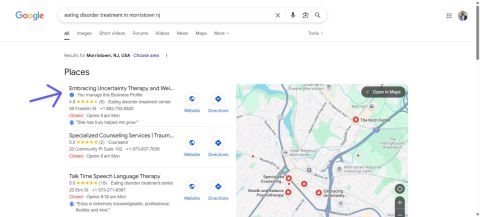
Landing-page updates, metadata, schema, competitor analysis, citations, and local content helped a therapy practice rank for key searches.
If this guide matches the problem you are seeing, the service page is the next practical step.
Monthly is enough for most brands. Weekly only if you are actively working on the problem and want to see whether the work moved anything.
No. Answers vary between runs and between users, and memory and personalization change them further. That is why you run each prompt several times and record how often you were named.
No. A sheet and twenty minutes gives you a real baseline. Move to a tool when the prompt list gets too long to run by hand, not before.
There is no published benchmark worth trusting, so compare against yourself and against the competitors your log keeps naming. Movement over months is the number that means something.
Yes. I set up the prompt list, run the baseline, and then work on the reason your brand is missing. See AI search visibility.
Send the site, I review the issue, then I reply with the practical first step.